Over the past few weeks, the Middle East conflict has shifted from a regional crisis to a real-time economic and geopolitical stress test for Asia and the world as a whole. What began with US and Israeli strikes on Iran on 28 February has since widened into a conflict affecting shipping routes, insurance costs, supply chains, diplomatic positioning, and a more precarious geopolitical position. The conflict raises deeper questions about the durability of regional order, and the United States’ foreign policy plans in the road ahead.
From confrontation to strategic disruption
On 28 February, the United States and Israel launched a joint military operation against Iran, killing Supreme Leader Ali Khamenei and triggering a fast-moving regional escalation. Iran has since retaliated through missile and drone attacks on Israel, US-linked targets, and Gulf infrastructure, while also moving to choke off shipping through the Strait of Hormuz – a vital sea passage that normally carries about one-fifth of global oil supply.
By early March, the commercial effects were already being felt. Supertanker costs in the Middle East had hit all-time highs, with the benchmark Middle East-to-China freight rate rising to about US$423,736 per day for large crude carriers, while shipping rates for liquefied natural gas (LNG) jumped more than 40%. As the conflict entered its third week, oil prices climbed back above US$100 a barrel. Asian refiners began warning that they could not secure prompt replacement cargoes, with analysts expecting refinery run cuts of 5% to 30% for players heavily reliant on Middle East crude.
President Donald Trump, having largely bypassed diplomatic coordination before launching the strikes, later pressed allies and major Asian economies including Japan, South Korea and China to help reopen the Strait of Hormuz.
Governments and businesses are maintaining a cautious outlook
Beyond oil shocks, the conflict has since amalgamated into a broader global trade disruption. If trade through the Strait of Hormuz is substantially reduced, Asia will feel its impacts first and most acutely, leaving refiners and importers highly exposed as more than 80% of the oil and LNG currently passing through the strait goes to Asian markets.
The energy shock has prompted Southeast Asian governments to adopt swift measures. As of last week, the Thai government implemented conservation measures for its public service, such as working from home and suspending overseas trips. ASEAN foreign and economic ministers held a special meeting on 13 March, warning that surging oil prices and trade disruptions were already hitting the region and calling for global energy supply chains to remain open.
For Southeast Asian businesses, operating costs have risen sharply. Singapore logistics firms said that cargo to the Middle East had nearly stalled, with some warning that transport and warehousing costs could rise by as much as 50%. A survey by Singapore’s The Business Times similarly reported that firms were bracing for higher energy costs and reassessing cost structures and Middle East expansion plans. A slew of refineries in the region, such as Indonesia’s largest petrochemical firm, have also announced force majeure notices to cope with the oil shocks. These developments have prompted heightened caution among businesses in the region.
Looking ahead: geopolitics and trade in Southeast Asia
The Middle East conflict comes amidst the US’ increased use of trade instruments to defend its economic interests – several Southeast Asian economies are navigating the US’ recent Section 301 probe on forced labour while finalising reciprocal tariff agreements with the US. Furthermore, the conflict is also forcing Southeast Asian governments into a more challenging geopolitical posture. As the US seeks wider support to secure the Strait of Hormuz, Iran continues to show that it retains asymmetric leverage over global energy flows.
Consequently, several postures from governments and businesses may emerge. First, Southeast Asia is likely to become more cautious but not necessarily more aligned. Governments will try to avoid hard strategic commitments while quietly deepening contingency coordination with both security and economic partners, especially maritime states and import-dependent economies. For instance, Indonesia had engaged the Trump administration on its Board of Peace initiative, but has since put discussions on hold and signalled it could walk away if the initiative is not seen to serve Palestinian interests. Southeast Asian governments may remain open to selective cooperation with the US but are carefully weighing the benefits of alignment with the US amidst the prevailing geopolitical climate.
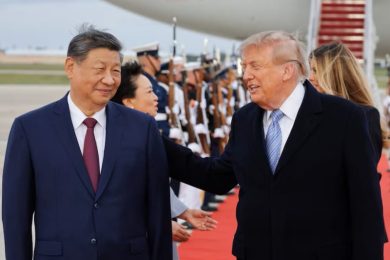
Second, the conflict may reinforce a more transactional regional order as Southeast Asian states hedge between the US and China. The uncertainty around the planned Trump-Xi meeting reflects that fluidity, with reports that President Trump’s visit to China could be delayed, even as the White House insisted it was not in jeopardy. The same dynamic applies to Japan. rime Minister Sanae Takaichi is set to meet Trump in Washington this week where the Middle East conflict is high on the agenda, but earlier stressed that Japan is not planning a mission to escort vessels in the Middle East. This suggests that even close US partners are trying to limit involvement in the Middle East escalation to prevent spillover into their Indo-Pacific alliance commitments.
Third, businesses should plan for continuity and resilience to cope with the commercial and political aftershocks. For Southeast Asia, this translates into forward-looking preparation for higher costs as well as a more volatile geopolitical environment in which trade routes, alliance politics and government intervention can turn the tides faster than formal diplomacy.
As the crisis continues to unfold, the likeliest outcome of the conflict remains sharper hedging and more guarded pragmatism for both governments and businesses alike –one that Southeast Asia will need to brace itself for.
Sources
- https://www.cfr.org/global-conflict-tracker/conflict/confrontation-between-united-states-and-iran
- https://www.reuters.com/business/energy/middle-east-oil-exports-drop-least-60-hormuz-stays-mostly-closed-data-shows-2026-03-16/
- https://www.reuters.com/markets/commodities/us-is-quickly-exhausting-tools-absorb-iran-war-oil-shock-2026-03-16/
- https://www.reuters.com/world/china/trump-warns-nato-faces-very-bad-future-if-allies-fail-help-us-iran-ft-reports-2026-03-16/
- https://www.straitstimes.com/business/economy/force-majeure-notices-signal-a-worsening-lng-supply-crunch-for-asia-including-spore
- https://www.reuters.com/world/asia-pacific/corrected-southeast-asian-refineries-curb-output-war-tightened-crude-supply-2026-03-10/
- https://www.straitstimes.com/business/companies-markets/singapore-companies-turn-cautious-as-business-sentiment-takes-hit-from-iran-war-survey
- https://www.channelnewsasia.com/asia/thailand-energy-saving-civil-servants-work-home-5983736
- https://www.businesstimes.com.sg/singapore/singapore-businesses-brace-higher-energy-costs-supply-chain-disruption-gulf-conflict
- https://www.channelnewsasia.com/singapore/logistics-firms-middle-east-cargo-tensions-supply-chain-disruptions-5981711
- https://www.straitstimes.com/business/economy/force-majeure-notices-signal-a-worsening-lng-supply-crunch-for-asia-including-spore
- https://thediplomat.com/2026/03/asean-again-calls-for-halt-to-iran-war-citing-possible-sustained-economic-challenges/
- https://www.scmp.com/week-asia/politics/article/3346114/indonesias-role-us-led-board-peace-under-scrutiny-amid-iran-crisis
- https://www.reuters.com/world/asia-pacific/trump-xi-meeting-not-jeopardy-could-be-delayed-white-house-says-2026-03-16/
- https://www.japantimes.co.jp/news/2026/03/17/japan/politics/trump-takaichi-meeting/