58th ASEAN Economic Ministers’ Meeting: DEFA and the Future of ASEAN’s Digital Economy
By Anandita Pathak
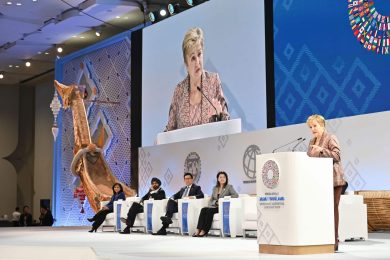
The 58th ASEAN Economic Ministers’ Meeting and Related Meetings were held from 19-22 September 2026 in Manila, Philippines, under this year’s theme “Navigating Our Future, Together”. The meeting focused on enhancing ASEAN’s regional economic integration and resilience agenda, with digital economy emerging as a key topic of discussion.
The ASEAN Economic Ministers’ Meeting highlighted the conclusion of DEFA negotiations. It welcomed preparations for its expected signing on the sidelines of the 49th ASEAN Summit in November 2026. The meeting also adopted the ASEAN Economic Community (AEC) Sectoral Plans to guide the AEC Strategic Plan 2026-2030. Further, it noted plans to bring the upgraded ASEAN Trade in Goods Agreement (ATIGA) into force within 2026, and support for Timor-Leste’s accession to ASEAN economic agreements.
The meeting also reaffirmed the outlook for a global ASEAN and sought to deepen external partnerships through agreements on free trade, investment, and trade in goods with several APAC markets and regional blocs.
Digital Economy Framework Agreement (DEFA): Background and Scope
This framework agreement traces its roots back to an ASEAN Economic Ministers’ meeting in August 2023, where the study on the Digital Economy Framework Agreement (DEFA) was endorsed. Under Indonesia’s chairmanship, the negotiations for DEFA were launched in 2023. They were declared substantially concluded at the 26th ASEAN Economic Community Council Meeting in Kuala Lumpur on 24 October 2025. The remaining outstanding issues were resolved and the negotiations fully concluded at the Second Meeting of the 57th ASEAN Senior Economic Officials’ Meeting on 27-29 May 2026 in Manila, Philippines.
DEFA is the region’s first legally binding digital economy framework agreement. Once signed and implemented, it will harmonise rules on areas spanning digital trade, cross-border e-commerce, cybersecurity, digital ID, digital payments, e-invoicing, cross-border data flows, data protection, and online safety, and emerging technologies. It has been estimated that ASEAN’s digital economy is projected to grow from approximately US$300 billion to nearly US$1 trillion by 2030. With progressive DEFA rules potentially doubling its value contribution to US$2 trillion.
Other Digital Economy Initiatives Discussed
To complement the implementation of DEFA, ASEAN is also developing an ASEAN Leaders’ Declaration on the Cross-Border Movement of Digital Workers, which will support digital-talent mobility. Alongside this, the meeting welcomed the adoption of the ASEAN Guidelines on Digital Recognition of Qualifications and Credentials. This will support greater trust, transparency, and mobility of learners and professionals across ASEAN.
Progress continued on MSME initiatives including the MSME Digital Trade Outreach Kit and Artificial Intelligence for MSME Advancement in ASEAN. The meeting also noted discussions on establishing an ASEAN Centre of Excellence for MSMEs in the Philippines and progress on its feasibility study. Separately, ASEAN is advancing regionally comparable and recognised Unique Business Identification Numbers (UBIN) to improve trust and reduce administrative barriers in cross-border transactions.
Wider Economic Agenda
The meeting noted that ATIGA preferential tariff utilisation rose 11 percentage points, from 51.7% in 2024 to 62.7% in 2025. It further welcomed the completion of the ASEAN Trade in Goods Strategic Action Plan 2026-2030. It also welcomed the Declaration on the Provisional Application of the Second Protocol to Amend ATIGA. Under the Declaration, Member States may apply the Protocol provisionally on a voluntary and reciprocal basis. This will help facilitate the movement of goods and increase transparency and predictability for businesses, especially MSMEs.
On investment, ASEAN completed the signing of the Fifth Protocol to Amend the ASEAN Comprehensive Investment Agreement (ACIA). This moves ACIA to a two-annex negative list, which gives investors greater certainty. The meeting welcomed the ASEAN Sustainable Investment Guidelines and commended progress under the Regional Investment Promotion Action Plan 2025-2030. It also noted the forthcoming IP Valuation Manual to expand IP-backed financing. Preparatory work towards a potential Green Economy Framework Agreement (GEFA) continues. The vision is to support an interoperable ASEAN carbon market. Its scope and commitments remain to be determined.
Significant progress was also noted through the ASEAN Single Window (ASW) in facilitating exchanges of electronic trade-related documents. ASEAN has also endorsed the ASW 2.0 Roadmap and finalised its technical specifications. Discussions are underway on electronic document exchange with external partners including Japan, Korea, China and Hong Kong.
Implications for Businesses and key watchpoints
ASEAN’s integrated and inclusive regional approach, through DEFA, in solving the barriers that exist around digital development is expected to benefit businesses in the region. It is intended to lower compliance costs and operational costs, make cross-border transactions easier and expand the market for companies that can scale digitally.
For instance, for MSMEs, DEFA could ease regional expansion by helping them onboard customers from across markets through a single digital identity framework. For larger firms operating across several ASEAN markets, common rules and interoperable systems could reduce compliance costs and simplify regional operations. The OECD has thus highlighted that DEFA could increase intra-ASEAN trade by up to 20%.
However, the successful conclusion of negotiations does not by itself ensure immediate benefits. DEFA is expected to be signed on the sidelines of the 49th ASEAN Summit in November 2026. It must then be ratified and implemented domestically by each Member State and its implementation may also vary in speed across Member States. A potential approach that could accommodate differing levels of readiness is the “ASEAN minus X” formula, under which Member States that are ready could proceed first while others join later. Whether this flexibility is used, and the form the final implementation arrangements take, will depend on the final text of DEFA.
Considering this, some of the key watch points for businesses will be as follows:
- The signing of DEFA at the 49th ASEAN Summit in November 2026 and the release of its final text
- Ratification and entry into force and any differences in implementation timelines among Member States
- The treatment of cross-border data flows, data localisation and protection
- How emerging technologies such as Artificial Intelligence are covered in its implementation
- MSME uptake across markets and the capacity-building support available to Member States
- Linkages of DEFA with the Declaration on the Cross-Border Movement of Digital Workers
Sources:
- https://asean2026.gov.ph/post/view/?title=the-58th-asean-economic-ministers-aem-meeting
- https://asean2026.gov.ph/post/view/?title=the-twenty-ninth-aem-plus-three-consultation
- https://asean.org/asean-defa-study-projects-digital-economy-leap-to-us2tn-by-2030/
- https://asean.org/statement-of-the-chairperson-of-the-asean-senior-economic-officials-seom-on-the-conclusion-of-asean-defa-negotiations/
- https://www.biometricupdate.com/202608/aseans-defa-sets-stage-for-regional-digital-identity-interoperability
- https://www.ey.com/en_sg/insights/strategy/how-the-defa-could-translate-into-shared-growth-for-southeast-asia
- https://www.isas.nus.edu.sg/papers/the-digital-economy-framework-agreement-connecting-india-and-asean/
- https://www.mti.gov.sg/newsroom/asean-advances-economic-integration-and-forges-new-growth-opportunities-amidst-global-uncertainties/
- https://www.weforum.org/stories/technological-innovation/asean-testing-concept-digital-multilateralism/