APEC Finance Ministers Meet in Hong Kong: Key Outcomes from 2026
By Anandita Pathak
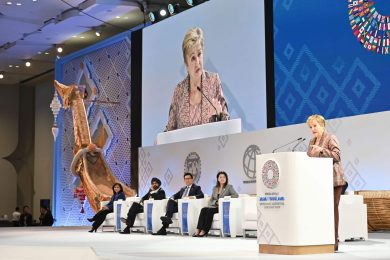
The 33rd APEC Finance Ministers’ Meeting took place on 20–21 October 2026 in Hong Kong, China. H.E. Lan Fo’an, Minister of Finance of the People’s Republic of China, chaired the meeting. The meeting ran under the APEC 2026 theme, “Building an Asia-Pacific Community to Prosper Together”. Its priorities were “Openness, Innovation, Cooperation”. Ministers reaffirmed their commitment to an open, dynamic, resilient and peaceful Asia-Pacific community by 2040. The APEC Putrajaya Vision 2040, the Incheon Plan and other frameworks guide this commitment. More than 300 delegates from APEC member economies, observers and international organisations attended.
Ministers discussed the global and regional economy, fiscal policy supporting households and digital infrastructure financing. They also discussed financial access and opportunity for all. The International Monetary Fund (IMF) and Asian Development Bank (ADB) presented assessments of global and regional economic conditions. A World Bank report examined how fiscal policy can strengthen household resilience and long-term growth. The APEC Policy Support Unit presented findings from 54 cases submitted by 18 member economies. The findings showed that access alone does not ensure financial inclusion. High service costs, limited financial literacy and difficulties using financial services remain significant barriers.
AI and digital technologies are transforming businesses and industries across the region. Against this backdrop, Ministers examined how to attract investment into digital infrastructure. The meeting produced a key outcome: the Policy Statement on Digital Infrastructure Financing across the Asia-Pacific Region. Ministers reached consensus on practical financial-sector cooperation. This cooperation focuses on supporting livelihoods, digital infrastructure financing and locally adapted measures for inclusive finance development.
Digital Infrastructure Financing
Ministers recognised that robust digital infrastructure is key to economic resilience and financial stability. However, financing gaps persist across economies because of policy and regulatory constraints and limited financing channels. They welcomed and endorsed the Policy Statement on Digital Infrastructure Financing across the Asia-Pacific Region. This voluntary, non-binding document under the Finance Ministers’ Process supports a digitally empowered Asia-Pacific region. It describes digital infrastructure as the cornerstone of the digital economy. Digital infrastructure shapes long-term growth, business participation (especially for MSMEs) and access to digital services. It also shapes regional trade and economic connectivity.
Ministers encouraged member economies to build reliable, accessible, scalable, trusted, secure and resilient digital infrastructure. They also encouraged economies to enhance digital literacy and skills, and promote interoperability and cross-border connectivity. In addition, they called for digital technologies and infrastructure to remain accessible. They encouraged exchanging best practices and developing a whole-of-ecosystem approach. This approach involves the public and private sectors and Multilateral Development Banks (MDBs).
Recommendations for each sector
- The public sector’s role was to create an enabling environment and provide catalytic finance. The statement highlighted sector-specific, risk-managed and transparent regulatory frameworks, including predictable policies, streamlined approvals, legal clarity, and strong institutional and technical capacity, while respecting domestic circumstances and legal frameworks. Public funds were acknowledged as a catalyst for crowding in private investment. Economies were encouraged to consider project-preparation facilities, first-loss guarantees and risk-sharing arrangements to address early-stage risks, improve bankability and unlock commercial financing.
- The private sector was encouraged to innovate, scale investment and adopt catalytic financing approaches, including financial leasing, asset securitisation and other instruments, to lower financing barriers. It was also urged to aggregate capital from pension funds, insurance companies and sovereign wealth funds, and engage with the public sector and MDBs in upstream project preparation and risk assessment. This would build a pipeline of bankable projects while promoting open, trusted, secure and high-quality infrastructure.
- MDBs were encouraged to focus on project preparation, risk management and collaboration. This includes supporting digital infrastructure projects through activities such as cybersecurity assessments. MDBs were encouraged to work with member economies and the private sector to catalyse private investment and use regional cooperation mechanisms for capacity building, policy dialogue and sharing best practices. Such collaboration could align diagnostics, project preparation, layered co-financing and risk-management approaches, including local-currency hedging facilities and specialised guarantee funds. By pooling expertise and resources, MDBs can help scarce concessional and public resources catalyse rather than replace private investment.
Financial Access and opportunity for All
Other Key Discussions
- Around Artificial Intelligence: In his opening remarks, Lan Fo’an, China’s Minister of Finance and Chair of the APEC Finance Ministers’ Meeting, recognised artificial intelligence’s potential to advance digital technologies and green transitions. He called on economies to strengthen macroeconomic policies and policy coordination to support growth and safeguard regional economic and financial stability. Eduardo Pedrosa, Executive Director of the APEC Secretariat, highlighted the need to translate financial cooperation and technological progress into economic benefits. He stressed that economies need infrastructure, financing and skills to turn AI-driven progress into stronger businesses, better jobs and greater household economic security.
- Global and regional economy: Ministers acknowledged the economy’s resilience, with technological development and industrial transformation as growth engines. However, downside risks remain, including geoeconomic tensions, supply-chain vulnerabilities, commodity-price volatility, tighter financing conditions, extreme weather events and policy uncertainty. They noted persistent global imbalances, agreed to strengthen cooperation on global rebalancing, reaffirmed their commitment to resilient supply chains and open trade corridors, and reaffirmed their 2021 exchange-rate commitments.
- Fiscal policy supporting households: Ministers reaffirmed that well-targeted fiscal policies –particularly strengthening household consumption where needed and investing in human capital across the life cycle – can support short-term domestic demand and long-term productivity, innovation and growth. They acknowledged the World Bank report on Supporting Households and Investing in Human Capital: Fiscal Policy Considerations for Sustaining Growth in APEC, and recognised fiscal sustainability, macroeconomic stability and prudent public-debt management.