
ASEAN’s AI Reality Check: Enthusiasm is High, Readiness is Not
By Jeff Paine, Managing Director, PS Engage
Yesterday I attended the 2026 AmChamSG Regional Economic Conference which featured the release of the ASEAN Business Outlook Survey (ABOS)– The Future of the 21st Century Economy, co-authored by AmCham Singapore, Accenture and Google. The report highlighted the economic potential and business sentiment in the ASEAN, with a particular focus on AI and the state of adoption across the region.
The first day featured speakers including keynote speaker Deputy Prime Minister of Singapore and Minister for Trade and Industry Mr Gan Kim Yong, US Ambassador to Singapore Dr Anjani K. Sinha, AMCHAM CEO Dr Hsien-Hsien Lei, former US Ambassador to Vietnam Ted Osius and numerous speakers from the business community. The conference celebrated 250 years US independence and 60 years of cooperation and partnership between the USA and Singapore. There are more than 6,000 US companies in Singapore supporting more than 200,000 jobs here.
DPM Gan discussed Singapore’s role in the AI world. Singapore announced its AI approach this year and established an AI Council chaired by the Prime Minister. As with the Smart Nation Initiative, having the Prime Minister chair such an important initiative highlights the importance Singapore places on AI. DPM Gan talked about the importance of AI literacy for all Singaporeans and how Singapore will work towards developing a community of AI specialists in finance and advanced manufacturing.
As expected, Singapore will keep its options open with respect to technologies from the USA and China, as they pertain to AI. The DPM highlighted that while there could be some job losses, the goal is to make sure that the overall impact of AI in Singapore is positive. There is a need to transform companies into AI companies.
As Singapore prepares to take the chairmanship of ASEAN next year, DPM Gan also discussed the Economic Framework Agreement (DEFA), which is expected to be signed by the end of this year, alongside an ASEAN power grid, and an ASEAN multilateral payment system project called Nexus. Autonomous vehicles are also currently under testing and should be hitting the roads soon. Exciting times to come!
In addition to the remarks from the DPM and US Ambassador to Singapore, there were presentations on digital assets with LKYSPP’s Katherine Ng interviewing Coinbase Chief Policy Officer Mr Faryar Shirzad.
I was a panellist in a session focused on AI in ASEAN and the key findings from the 2026 ASEAN Business Outlook Survey: Advancing ASEAN into the Agentic Era. I shared some of the ideas below.
For more than four years, our team has closely tracked AI developments across Asia. We monitor both AI governance frameworks and AI adoption within public administration and the broader public sector. On behalf of clients, we have participated in formal policy consultations and government submissions in markets such as Vietnam and Thailand through chambers of commerce and industry associations. We have also contributed to AI policy discussions outside ASEAN.
Today, AI is firmly on the agenda of corporate boards and management teams. Many multinational companies are actively measuring AI adoption across their workforce. In some organisations, employee performance is increasingly linked to AI usage, with a clear expectation that greater use equates to higher productivity.
At the same time, human oversight remains essential in highly regulated sectors such as finance, healthcare and critical infrastructure. Organisations recognise that while AI can improve efficiency, it also introduces operational, compliance and competitive risks that require careful governance.
Broad Enthusiasm, Slow Readiness
One finding that has generated significant discussion is the apparent gap between AI experimentation and actual maturity. While 87% of organisations are piloting AI agents, only 7% are considered “advanced” in their deployment.
Does this surprise me? Not at all.
Our experience across Asia has consistently shown that activity has outpaced readiness. The models exist, investment is flowing and infrastructure is being built. The harder work is happening inside enterprises.
In many organisations, AI initiatives begin with enthusiasm but stall when leaders encounter challenges involving governance, culture, data quality, accountability and measurement. Deploying a chatbot is relatively easy. Transforming a business operating model is not.
Is ASEAN Ready for AI?
The report highlights an ASEAN AI readiness score of just 42 out of 100.
This compares with:
- North America: 82.6
- Western Europe: 69.6
- East Asia: 57.9
- Singapore: 84.3
The numbers tell an important story. ASEAN is embracing AI rapidly, but most organisations remain in the early stages of maturity.
What Does Readiness Actually Mean?
True AI readiness extends far beyond access to technology.
1. Governance and Trust
Organisations need formal policies, oversight mechanisms and accountability structures governing how AI systems operate.
Board-level involvement becomes increasingly important as AI moves from experimentation into core business functions. Leaders must understand who is responsible when AI-driven decisions affect customers, employees or business outcomes.
2. Operating Model and Culture
Technology adoption is often easier than cultural adoption.
Many organisations underestimate the importance of change management. Employees need clarity on how AI fits into their roles, while leaders must create a culture where experimentation is encouraged without compromising accountability.
The report identifies culture and change management as one of ASEAN’s biggest barriers, a finding that aligns closely with what we see in the market.
3. Data Readiness
AI is only as good as the data that powers it.
Many organisations still struggle with fragmented, inconsistent or inaccessible data. Before advanced AI agents can deliver value, data must be structured, available and trustworthy.
4. Measurement and ROI
One of the biggest maturity gaps in ASEAN is measurement. Organisations frequently launch AI initiatives without establishing clear metrics for success.
As the saying goes:
“Value that is not measured cannot be managed, and value that is not managed is not captured.”
Without robust performance measurement, AI risks becoming an interesting experiment rather than a strategic capability.
5. Market Strategy and Deployment Depth
Many companies have successfully launched AI pilots. Far fewer have extended AI into critical business functions that drive revenue growth, customer engagement or competitive differentiation.
The difference between experimentation and transformation lies in deployment depth.
How ASEAN Organisations Are Using AI Today
Across the region, the most common AI use cases remain focused on efficiency gains and cost reduction.
Organisations are using generative AI to:
- Improve employee productivity
- Automate repetitive processes
- Reduce operational costs
- Accelerate content creation
- Enhance customer service
By contrast, fewer organisations are using AI to create entirely new products, services or revenue streams.
Human oversight also remains prevalent, particularly in regulated industries, organisations continue to rely on human review rather than fully autonomous agents. This reflects both regulatory realities and business risk considerations.
Data Centres: The Foundation of the AI Economy
None of this AI growth can happen without infrastructure.
The report estimates that approximately US$30 billion will be invested in ASEAN data centre capacity by 2030. Capital is not the primary constraint. However, public acceptance, regulation and sustainability are becoming increasingly important.
Recent developments in the United States demonstrate the challenge. Community opposition to new data centre developments has become a significant political issue, with surveys indicating that many residents oppose large facilities being built near their communities.
Asia is experiencing a similar boom. Data centre development is accelerating in Johor Bahru, Tokyo, Sydney and Mumbai.
Yet concerns are emerging throughout the region around:
- Power consumption
- Water usage
- Environmental impact
- Grid reliability
- Community acceptance
These conversations are gaining visibility in markets including Australia, Vietnam and the Philippines. As AI demand increases, governments and operators will need to balance economic opportunity with sustainability considerations.
The Agentic AI Frontier
Meanwhile, the technology itself continues to evolve at extraordinary speed.
New frontier models are being introduced regularly, often reshaping market expectations overnight. For instance, ChatGPT 6 was released last week and the OpenAI CEO is already talking about the next release being even more powerful. Prediction markets had OpenAI in the single digits on the question, “Which company will have the best AI model at the end of 2026?”, but this jumped sharply following the release of ChatGPT 6.
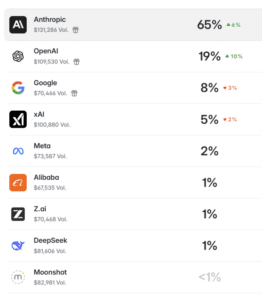
For businesses attempting to build long-term AI strategies, this creates a unique challenge. Organisations must invest confidently while recognising that today’s state-of-the-art capability may be superseded in a matter of months.
The AI race remains highly competitive, and leadership positions continue to shift rapidly as new models are released and evaluated.
What Resonated Most in the ABOS 2026 report?
One observation stood out. For years, companies viewed ASEAN primarily through the lens of manufacturing costs and labour arbitrage. That perception is changing.
Today, ASEAN’s growing middle class, expanding digital economy, improving connectivity and strengthening infrastructure are becoming far more important strategic drivers.
The report notes that the percentage of companies rating ASEAN markets outside Singapore as “very important” increased from 46% in 2022 to 68% in 2026.
That is a significant shift.
ASEAN is increasingly viewed not simply as a production base, but as a critical growth market.
Closing Thoughts
ASEAN is entering a new phase.
The region is becoming more strategically important, but companies are proceeding with caution. Geopolitical tensions, tariffs and competitive pressures are increasing costs and creating uncertainty.
At the same time, AI is everywhere, yet much of its potential remains underutilised. Most organisations are still deploying AI defensively, focusing on efficiency rather than transformation.
The leadership challenge is clear:
- Close the organisational readiness gap
- Build governance and trust frameworks
- Improve data quality and measurement
- Scale AI beyond pilots
- Capture ASEAN’s unique advantages in consumer growth, digital adoption and market expansion
The technology is here. The investment is here.
The real question is whether organisations are prepared to do the harder work necessary to turn AI from experimentation into competitive advantage.