Overview
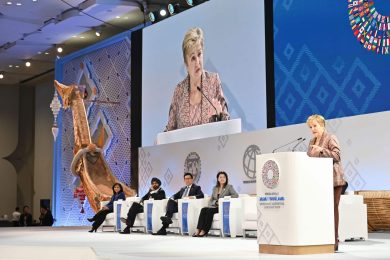
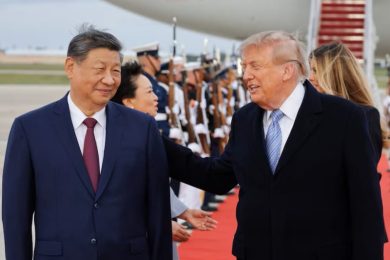
The annual World Economic Forum 2026 meeting was held in Davos, Switzerland on 19-23 January 2026, which brought global leaders together to discuss key geopolitical and economic issues. The summit included key political figures such as US President Donald Trump, leading the largest-ever US delegation, China’s Vice-Premier He Lifeng, and European Commission President Ursula von der Leyen, and 65 heads of state/government and 400 top political leaders.
Key issues discussed included tariffs, the rapid rise of artificial intelligence, climate change concerns, and the future of electric vehicles. High-stakes geopolitical negotiations, and bilateral discussions signalled significant shifts in global economic and security architecture, particularly reflecting growing global concerns over trade tensions, technology disruption, and long-term economic stability.
Unlike previous years, the forum focused on five global challenges:
- Cooperation in a contested world (geopolitical fragmentation);
- Deploying AI responsibly at scale;
- Unlocking new sources of growth in a low-growth era;
- Investing better in people (jobs, skills, well-being); and
- Building prosperity within planetary boundaries (climate, nature). Away from the public programme, dialogue continued.
Technology
WEF 2026 discussions continued to highlight the critical intersection of innovation, trust and global cooperation. Within this context, regulation has emerged as central to shaping future outcomes.
There was an overall consensus that well-designed regulation does not hinder innovation; it enables it to advance safely, inclusively and with public confidence. In the coming decade, the design of regulatory systems is likely to become as consequential as the technologies they govern. The release of the WEF paper, ‘The Regulatory Frontier’ reinforces the growing recognition that advancing regulatory capability is one of the most important infrastructure investments of the digital age.
Microsoft CEO and Chairman Satya Nadella issued a rare warning about the future of AI, saying that if it stays limited to big tech companies and wealthy economies, and does not spread to other areas, the ongoing AI boom may turn into a bubble.
Transatlantic Relations
US President Donald Trump addressed the forum on its third day. During his speech, he said that he would not use force to take over Greenland. On the sidelines of the forum, Trump met Nato Secretary General Mark Rutte. During their interaction, the US agreed to drop its proposed tariffs on eight European Union countries starting February 1. Trump also said that he had secured what he described as “a concept of a deal” on Greenland.
However, the summit revealed that Europe’s trust in the transatlantic relationship with Washington has been badly rattled, and its leaders are looking at how to act faster when the next crisis occurs. Commentators have said that the US-Europe alliance was a critical part of the global economic order – and its rupture is very consequential. European Commission President Ursula von der Leyen announced in her Special Address that the EU and India were on the verge of signing historic free trade agreement with India, which will have ramifications for the larger international system.
Restructuring of the International System
There was consensus that the world is going through a “rupture” in the global order, and not a slow or orderly transition with the growing use of trade, finance and supply chains as tools of pressure. Notably, Canadian PM Carney said that the old idea of a stable, rules-based international system is fading, replaced by a harsher reality shaped by power politics and rivalry among major nations. There was a notable change of tone towards China being a cause of disruption to the rules-based world order.
U.S. President Donald Trump launched his Board of Peace, initially designed to cement Gaza’s unstable ceasefire but which he foresees taking a wider role worrying to other global powers, although he said it would work with the United Nations. Apart from the U.S., no other permanent member of the U.N. Security Council – the five nations with the most say over international law and diplomacy since the end of World War Two – has indicated its commitment to join. The board’s creation was endorsed by a United Nations Security Council resolution as part of Trump’s Gaza peace plan, and U.N. spokesperson Rolando Gomez said that U.N. engagement with the board would only be in that context.