APEC 2023 – Opportunities for ASEAN
By Edika Amin, Analyst – Government Relations, PS-engage, 13 January 2023
Introduction
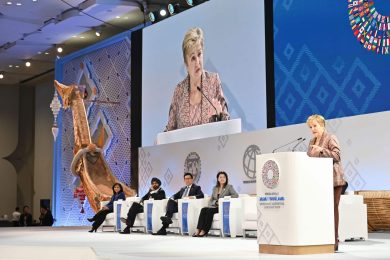
“Open. Connect. Balance.” was a key theme in allowing Thailand to do a tremendous job in hosting the Asia-Pacific Economic Cooperation (APEC) forum as the region focused on an inclusive and sustainable recovery in response to the COVID-19 pandemic.
In 2022, Thailand consistently pushed for a sustainable economy and provided much for the U.S. to build on as they look to host APEC in 2023. In addition to this, Thailand should also be commended for their ability to build consensus at a time of conflict and ambiguity. A key example is how APEC dealt with the Russia-Ukraine conflict, which saw issues being tabled at the recent Bangkok conference. Although at first there were concerns of Members from bringing the conflict to the APEC fora, towards the end of 2022 many country officials recognized that the situation in Ukraine had affected all economies and resulted to APEC taking a position to condemn the war in Ukraine.
APEC 2023 – Key Dates and Highlights
As the US takes the hosting mantle of 2023, the theme for APEC will be ‘Creating a Resilient Sustainable Future for All’. Building off this theme it seems that the U.S.’ key message as host is the importance of strengthening the public-private partnership of APEC which will require stronger engagement with the private sector throughout 2023.
On this note, there are four major clusters of meetings that the industry should take note off namely:
- February and May: trade and transportation
- August: food security, SMEs, health, women, energy, and natural disasters
- November: trade ministerial and finance ministerial
In addition to this Ministerial Level Meetings will be held across the U.S., including in Palm Springs, Detroit, Seattle and San Francisco.
Opportunity for ASEAN
For ASEAN, the following thematic areas can be explored further in this year’s discussions:
- The role of Small and Medium Enterprises (SMEs) in APEC 2023: building off 2022’s momentum, APEC should look at how SMEs can get involved in global supply chains. There will also be emphasis on women-run SMEs where ASEAN can showcase its dominant stance in this area.
- Sustainability and resilience – Rise of ESGs in APEC conversations: There seems to be consensus among APEC members on ESGs, particularly following after the signing of the Bangkok Goals on Bio-Circular-Green (BCG) Economy. Implementation in 2023 will be key. How can APEC work with the private sector to increase ESG take up?
- Advocate against restrictive trade barriers (e.g., data localization under pretenses of security): There is space to address numerous areas of the digital economy. APEC will look at hosting a Digital Week, pulling together digital and telecommunication working groups to talk about open networks, cloud computing, digital assets, digital payments as well as good digital regulatory practices. This can provide a good intelligence gathering opportunity as many ASEAN Member states are currently reviewing their current legislation to bring in line with the digital economy.
- Greater engagement between APEC Government Members and senior private sector executives: The APEC Senior Official Meetings would provide the best platform for public and private sector to meet. In addition to this, there is potential to work off APEC Business Advisory Council (ABAC) calendar dates as well. 2023 ABAC events are scheduled in New Zealand (January) Brunei (April), Philippines (July) and U.S. (November) where ASEAN can play a key role.
- More discussions on Health: Health will continue to be a key issue in APEC discussions. A new burgeoning area is healthy aging (focus on nutrition and medical devices) as a potential area, given the slow adoption of regulation on this. Best practices can be showcased by APEC. Given ASEAN dynamic population and demographics, ASEAN members states can contribute in discussions for all life-cycles.
The US hosting APEC this year will further build on ASEAN Members states work in 2022 to be a decisive force in the APEC discussions. Policymakers and industry should look to capitalize on this platform and benefit throughout the year.
Image source: NCAPEC