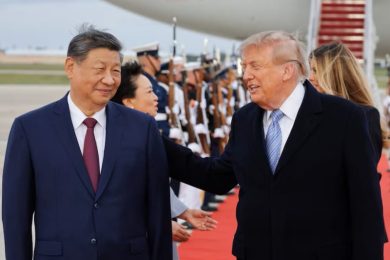
Artificial intelligence (AI) is fast becoming the subject of intensifying global competition, primarily by major economies that can pour billions of dollars into AI research, infrastructure, and human capital. After all, the race is not merely a technological contest but also a geopolitical and economic one, much like the space race during the 20th century. However, while this race is currently dominated by large economies, developing economies, like the Philippines, are not necessarily sidelined from reaping AI’s benefits. In the Policy Note published by the National Economic Development Authority (NEDA), the lead economic agency provides insight on how the Philippine government plans to navigate the adoption and regulation of AI in the country.
Global Regulatory Framework
The policy note begins with NEDA explaining how global AI regulations take varying approaches, specifically in balancing the benefits of innovation with risks and ethical considerations.
According to the NEDA, the European Union (EU), which recently passed the first comprehensive AI regulation through the EU AI Act, has taken the lead in developing a comprehensive, binding framework for AI governance. The AI act adopts a risk-based approach, categorizing AI applications by their level of societal risk: prohibited (e.g., social scoring, biometric identification systems, manipulative techniques to shape social behavior), high-risk (e.g., credit scoring, risk premium calculation, employment decisions), and low-risk (e.g., chatbots, deepfakes). Each category carries its own set of obligations, including transparency, registration, and conformity assessments. Notably, violations of the AI Act come with steep penalties, with up to 7% of global turnover for engaging in prohibited practices.
In contrast, the United States has opted for a flexible approach to AI regulation. Rather than a single AI law, the U.S. government issued an Executive Order, which delegated to the individual agencies of the executive branch the task of studying and implementing guidelines on the use of AI in their particular sector.
Finally, and much closer to home, the Policy Note focuses on the approach of ASEAN countries. It noted that the ASEAN had formulated the Guide on AI Governance and Ethics to serve as guiding principles for the use of AI and to ensure alignment and interoperability of the AI frameworks that would be developed individually by its members. The Policy Note highlighted that only six (6) countries in ASEAN (Singapore, Malaysia, Thailand, Vietnam, Indonesia and the Philippines) have made strides in regulating AI.
Focusing now on the Philippines, the policy note highlighted that the country has integrated AI into its development strategy and has commenced with programs and projects on AI adoption. For instance, the Department of Trade and Industry issued its National AI Strategy Roadmap and launched the Center for AI Research. More than these plans from the executive branch, several bills are pending in the Philippine Congress on the regulation and adoption of AI, which shows that AI has also been getting traction from the country’s legislative branch.
Opportunities for the Philippines
The NEDA paper highlights how AI, if deployed strategically, could be transformational, especially for countries like the Philippines, where traditional development hurdles can be bypassed by strategic adoption.
NEDA highlights several sectors where AI can find practical applications. This includes: (1) labour market, (2) education, (3) healthcare, (4) banking and finance, and (5) agriculture.
For the labour market, NEDA notes that economic predictions show that there will be a net loss of jobs in the near future due to AI and that AI disrupts the workforce by changing the demand towards more digital and cognitive competencies. To avoid this, NEDA advised mimicking what the BPO industry did, which is to embrace AI openly and aggressively and collaborate with the government and other sectors to upskill BPO employees and workers to avoid skill mismatch.
On the other hand, for the education sector, NEDA emphasized that AI can improve learning outcomes by enabling personalized instruction, streamlining administrative processes, and supporting teacher development. NEDA noted that partnerships have been created between DepEd and private tech firms, which are already introducing AI tools for literacy and teacher training. The paper also noted the efforts of the Commission of Higher Education and the Technical Education and Skills Development Authority to upskill college students and workers to improve their employability in this AI-driven economy.
Barriers to Adoption
Despite its potential, NEDA pointed out several structural and institutional barriers that continue to hinder the adoption of any advanced technology in the Philippines, not limited to AI. This includes: (1) insufficient digital infrastructure, (2) human capital and digital skills gap, (3) data availability and governance issues, (4) AI ethics and accountability, and (5) energy constraints.
Without the need for further elaboration, these barriers are to be expected from a developing economy with not many resources and that has started late with its digitalization efforts. Nevertheless, NEDA outlined key strategies to overcome these barriers, which include: (1) setting a clear direction and strategies specific to AI, (2) expanding digital infrastructure, (3) strengthening data governance, and (4) developing human capital. NEDA likewise suggests complementary measures such as (1) enhancement of governance and public trust in AI and (2) promotion of energy-efficient technologies to manage e-waste.
Overall, the recently published Policy Note on Artificial Intelligence by the National Economic and Development Authority (NEDA) provides government insight on how the Philippines plans to take part in the AI race or, at the very least, reap the benefits of AI development. In sum, through its policy note, NEDA recognizes the importance of AI and outlines the opportunities and risks for AI adoption in the Philippines.
More than anything, however, this policy note is a signal that the Philippines is more than ready to take AI seriously. At a time when some countries in the region are still seen as testing the waters, the Philippines has an opening to design a forward-looking, values-driven AI governance framework if it acts quickly towards implementing the department’s key recommendations.